There is a reason two Charlotte windshield quotes can differ by 40 percent for what looks like the same job. On paper, both say “windshield replacement, calibration included.” In practice, the result depends on the glass chemistry, the laminate, the acoustic layer, edge ceramics, the adhesives, and how carefully the technician handles the vehicle’s camera systems and body surfaces. If you want a fair Auto Glass Quote Charlotte drivers can trust, you need to know what you are paying for and what corners are easiest to cut.
I have managed and installed auto glass around Mecklenburg County long enough to see the patterns. A Civic with a base windshield can be straightforward, while a late-model SUV with heads-up display and a heated wiper park area can turn into a different project entirely. The best experience starts with specifics. The cheapest quote is often a generic placeholder, while the reliable one reads like a recipe. Let’s break down what matters.
What “quality” means with auto glass
Quality is not a single thing. It comes from three layers working together: the glass plies, the laminate between them, and the way the assembly bonds to your vehicle. Windshields are laminated safety glass, not tempered. Side and rear windows are almost always tempered. The front glass must absorb impacts, resist shattering, and allow your Advanced Driver Assistance Systems to see the world. If any of those fail, your risk goes up.
Glass ply composition is a good starting point. Most windshields use soda-lime glass, but the purity and flatness differs between manufacturers. Low-iron glass appears clearer along the edges and reduces the faint green hue you notice in cross-section. You will see this on luxury models and options with heads-up display. In cloudy or rainy Charlotte mornings, that small improvement in contrast can reduce eye strain. It is not essential for every car, yet it explains price differences when you ask for an Auto Glass Charlotte estimate and one shop is quoting premium optical clarity without saying so.
The laminate is the clear interlayer that holds broken shards in place. Standard PVB works for most vehicles. Acoustic PVB layers add mass damping that cuts wind noise and high-frequency tire roar. If your car shipped with acoustic glass, replacing it with a standard laminate is the quickest way to notice a louder cabin at 50 to 70 mph on I‑77. An honest Charlotte Auto Glass provider will ask whether your original glass had an “Acoustic” icon or part code. If they do not, ask them. It matters.
Edge ceramics and frit bands protect the adhesive from UV rays and improve bond integrity. You rarely notice it unless it is wrong. If the frit pattern does not match, you may see uneven black borders after installation. It is cosmetic, but it hints at an aftermarket part that was not engineered for your trim level.
OEM, OE-equivalent, and aftermarket: not just labels
When you shop for an Auto Glass Quote Charlotte residents often face the OEM versus aftermarket question. OEM means the glass sold under the automaker’s brand or made by the same supplier to the original spec. OE-equivalent is produced by the same or a comparable manufacturer but without the automaker’s logo, typically built to match form, fit, and function. Aftermarket can range from very good to barely acceptable. I have installed aftermarket windshields that outperformed aged OEM units, and I have rejected new pieces with waviness that would make anyone motion sick by mile three.
What separates a good OE-equivalent from a poor one is optical distortion and mounting precision. Stand about two feet from the glass, look through the passenger side toward a straight door frame or a vertical post, and move your head slowly left to right. If the line warps or ripples, the glass has distortion. You will see it at stoplights and it will tire your eyes. In Charlotte’s stop-and-go around Uptown, that fatigue adds up. Good shops reject distorted glass before it gets near your car.
Sensor brackets and mirror mounts are another differentiator. Modern windshields carry camera brackets, rain sensors, lane departure modules, and heating elements that must land exactly where the calibration expects. A slightly off-center mounting pad can force the camera to look up or down a fraction, which is enough to break the forward collision system’s accuracy.
ADAS calibration is not optional
Almost every Charlotte Windshield Quote for vehicles built after roughly 2016 should mention ADAS calibration. Lane keep assist, forward collision warnings, and adaptive cruise rely on cameras mounted to the glass. When you remove the windshield, you break the relationship between the camera and the road. Even if the bracket is perfect, variances in glass thickness and refractive index change the optical path.
There are two types of calibration: static and dynamic. Static uses targets in a controlled space. Dynamic uses a scan tool while driving at certain speeds with clear lane markings. Many vehicles require both. If a quote skips calibration for a car that clearly needs it, that price will look appealing but it transfers risk to you. Insurance carriers increasingly require documentation of calibration after a windshield replacement. A reputable Auto Glass Charlotte shop will either perform it in-house with factory-level tools or partner with a mobile calibration specialist who can produce a report. Ask for that report, with time stamps and vehicle VIN. It should live with your service records.
A quick anecdote: a CR‑V came in after a bargain replacement. The driver complained that the collision warning was oversensitive. The shop had used an aftermarket glass with a slightly different wedge angle behind the camera. The system would warn and brake earlier than intended. A correct windshield and calibration solved it. The first job saved $160 on paper and cost a half day and a second replacement to fix.
Adhesives, primers, and safe drive-away time
Urethane adhesive bonds the windshield to the pinch weld and provides structural support that affects roof strength in a rollover. The brand and cure time matter. Shops in Charlotte deal with summer humidity and winter cold snaps. Moisture-cured urethanes behave differently across seasons. High-modulus, non-conductive urethanes are the norm for vehicles with AM/FM diversity antennas or heaters embedded in the glass. Some high-end cars require non-conductive adhesives to avoid stray currents and interference.
Safe drive-away time is not a marketing line. It is the interval after installation when the bond has enough strength to survive a crash airbag deployment. That can range from 30 minutes to several hours depending on temperature, humidity, and adhesive. If you plan to pick up the car at lunch and jump onto I‑485, make sure the adhesive and conditions support that timeline. Good shops adjust the schedule or use products tailored to the day’s weather rather than pushing every job through the same clock.
Primers and corrosion control deserve attention. Charlotte roads mean occasional gravel strikes at highway speeds. Those chips at the pinch weld can hide rust. If the shop finds corrosion, they should clean, neutralize, and prime it before bonding. Skipping that step risks bond failure months later. You may not see it until a leak appears after a heavy storm. The repair is far more complicated once water travels into the headliner and electronics.
Reading a quote: the line items that belong
A clear Auto Glass Quote Charlotte drivers can rely on will list more than “windshield, labor.” At minimum you want to see the part number, whether it is OEM or OE-equivalent, any acoustic or solar coating, the adhesive brand and cure time expectations, calibration details, and miscellaneous parts like moldings or clips that will be replaced. If your model uses a one-time-use cowl clip or a rain sensor gel pad, the quote should include it. Otherwise, you end up with reused parts that do not seat well, which becomes creaks and wind noise on Providence Road.
Glass recycling and disposal fees might be included, and that is fine. More important is whether the shop will reuse existing moldings or install new OEM-style moldings when required. Some moldings can be preserved without damage, others cannot. An installer who assumes reuse on a model known for fragile cowl ends is setting you up for an ugly edge or a whistling sound at 40 mph.
Insurance assignments also change the paperwork. If you are going through insurance in North Carolina, where glass is part of the comprehensive coverage but not always zero-deductible, the shop should spell out your out-of-pocket. If you choose to pay cash for a Charlotte Auto Glass replacement to avoid a claim, you should still receive the same glass quality and calibration standards. The only difference should be who pays.
Acoustic, solar, and infrared layers: quieter and cooler, or just logos
Acoustic glass is not a gimmick. On a typical midsize sedan, swapping from standard to acoustic front glass lowers noise in the 1 to 2 kHz range enough to make conversations clearer. The layer is thin, and no one will see that you paid for it, but your ears will. You can usually spot acoustic windshields by an icon near the DOT code or by part numbers ending with an “A” variant. When a shop quotes two prices and says one is acoustic, ask whether your vehicle originally came with it. Keeping the spec consistent preserves the cabin character and resale expectations.
Solar and infrared coatings reflect infrared energy and reduce heat buildup. In Charlotte summers, a well-coated windshield can keep the dash and steering wheel temperatures tolerable. The difference is modest but noticeable when the car sits at a Panthers game in August. These coatings must match the car’s sensor expectations. Some radar detectors, toll transponders, and heads-up displays behave differently behind heavily coated glass. If your car has HUD, using the HUD-specific windshield is mandatory. The wedge layer that creates the virtual image is built into the glass. A non-HUD windshield will make the display double or blur. I have seen owners try to save by deleting HUD glass. They regretted it instantly.
The technician’s craft: prep, pull, set
Most of your experience comes down to how careful the technician is in three moments. First, cowl and trim removal. If the tech protects the paint with tape where tools may contact the body, you avoid chips that start rust months later. I keep a mental list of cars with hidden fasteners that fight back. Late-model Subarus require patience where the A-pillar clips lock into tabs. On a hurried day, those tabs snap and the trim never sits flush again.
Second, the cut. Cold knife, fiber wire, power tool, each has a place. Fiber wire reduces the risk of scratching the paint along the pinch weld. If I am working on a high-value SUV with a sensitive interior, wire is my choice. If the old adhesive is sloppy and thick, a square cut to a consistent thickness saves time and makes the bond uniform. The installer should dry fit the glass before primer goes on. That is where you catch a slightly bent corner or a molding that requires a different clip.
Third, the set. Two-person sets or setting devices allow precise placement without dragging adhesive. In a cramped garage in NoDa, a setting device makes the difference between a perfect drop and a bond that smears and leaves voids. A small void near a corner might not leak in light rain but will whistle as air passes at speed. It is easier to avoid than to fix.
Charlotte specifics: climate, roads, and supply
Charlotte’s climate sees humid summers, pollen waves in spring, and occasional cold snaps. Pollen is a nuisance when setting glass. Fine particles can land on the adhesive bed and compromise the bond. Good shops adjust scheduling on heavy pollen days or set the vehicle inside, wipe-down between steps, and keep a clean perimeter. Humidity helps moisture-cure urethanes, but too much can affect surface prep. You want a team that knows to re-wipe with the right solvent at the right moment.
Road conditions matter too. Construction zones around I‑77 and the 485 loop kick up aggregate. Pitting from sand and stone makes older windshields look hazy at night. If your windshield is more than five years old, check it under street lights. You may see a sparkle across the field that is not dirt. That is micro-pitting. A new windshield can transform night driving. When someone asks whether replacement is worth it just for pitting, I ask how much they drive at night and in rain. If the answer is a lot, the safety margin is not trivial.
Supply is the final Charlotte factor. We have strong distribution for domestic and Asian brands. European specialty glass can still require a wait, especially for laminated side glass with acoustic layers. If you drive a niche trim with heated wiper park, rain-light sensors, and HUD, build time into your plan. A shop that says “we can get it tomorrow” without checking the part code may be guessing.
Repair versus replacement: the point of no return
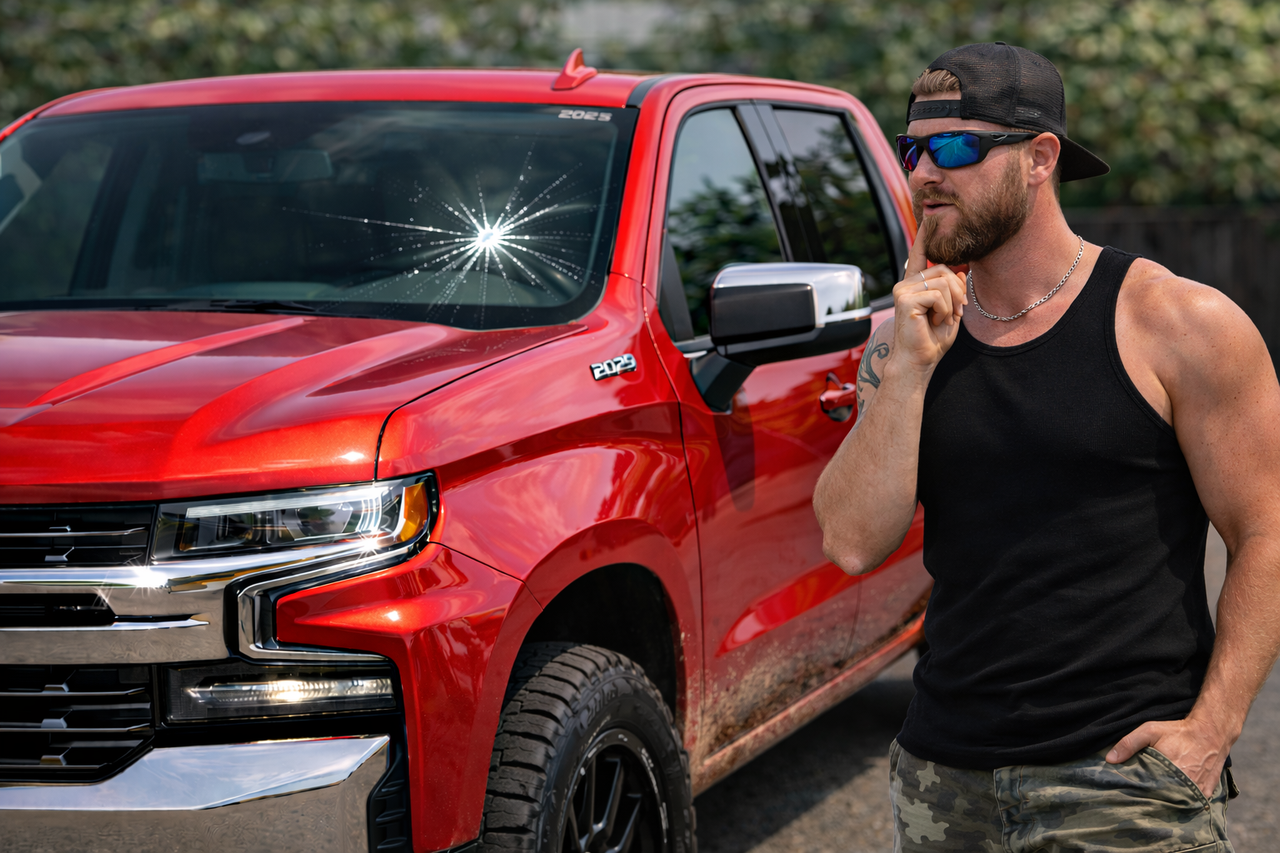
Plenty of stars and chips in the Charlotte area can be repaired rather than replaced. A good rule is to repair if the chip is smaller than a quarter, not in the driver’s primary line of sight, and not at the very edge where structural loads are highest. Resin injection works best within 24 to 48 hours of the impact. Heat cycles make the crack dirty and harder to bond. If you park outside at South End all day and find a star break, call quickly. Many mobile techs can stabilize it in a parking deck.
If a crack runs, even slowly, the decision is made for you. Laminated glass can hold a long crack for months, but the optical distraction and the risk of spreading during temperature changes do not justify the wait. I have seen a 6‑inch crack turn into 18 inches in one afternoon when a thunderstorm cooled a sunbaked windshield. Small decisions like parking in the shade and avoiding blasting the defroster on full heat right away can prevent that jump.
What a fair price looks like in Charlotte
Prices fluctuate with glass availability and vehicle features. For a common compact without sensors, expect a range that reflects part quality differences and labor standards. Once you add rain sensors, lane cameras, acoustic interlayers, or HUD, the spread increases. The lowest Charlotte Windshield Quote often excludes calibration or assumes a non-acoustic part. The highest often includes OEM branding and dealer-level calibration.
A pattern to watch: a quote that is 20 to 30 percent below the pack with the same stated features usually hides reuse of moldings, a generic adhesive, or a third-party calibration with no printed proof. There are also legitimate mobile services with lower overhead that still provide premium parts and proper calibration. The tell is documentation. If they list the exact glass manufacturer, adhesive brand, and calibration plan, you are likely in good hands.
Questions to ask before you book
- Will you install OEM, OE-equivalent, or aftermarket glass, and which manufacturer supplies it?
- Is the windshield acoustic, solar coated, low-iron, HUD-specific, or heated as originally equipped?
- What adhesive will you use, what is the expected safe drive-away time, and how will today’s weather affect it?
- Who performs ADAS calibration, static, dynamic, or both, and will I receive a printed or digital report tied to my VIN?
- Will you replace moldings, clips, and sensor gels as needed, and how do you handle corrosion at the pinch weld?
If a shop answers these without hedging, you are close to a dependable result. If they treat these as nuisances, keep looking. The best Charlotte Auto Glass teams welcome informed customers.
Warranty and aftercare
A meaningful warranty covers leaks, wind noise, and stress cracks unrelated to new impact damage. One year is common, lifetime against craftsmanship issues is better. For ADAS, ask whether recalibration is covered if the system throws a code within a short window. After installation, follow the care instructions. Leave a small window gap to equalize pressure, avoid slamming doors the first day, do not power wash the edges for a week, and do not rip off the painter’s tape early. Those strips stabilize moldings while the adhesive takes a set. They are not decoration, even if the color clashes with your paint.
If you notice a whistle or a drip, call right away. Installers prefer to inspect and fix quickly rather than let a concern fester. A minor edge adjustment or a dab of urethane can cure a symptom that would otherwise color your impression of the entire job.
How Charlotte shops differ and how to choose one
Around Charlotte, you will find national chains, regional specialists, and small independent teams. Each has strengths. National chains bring breadth of inventory and centralized calibration equipment. Independents often excel at custom work, vintage vehicles, and attentive prep that avoids collateral damage. What you want is a culture of quality. Watch the shop for ten minutes. Are cars covered inside with fender protectors, are windshields stored upright on padded racks, do techs wear gloves when handling the glass edges and sensor brackets? Details like these correlate strongly with outcomes.
Ask how they handle distinct scenarios. For example, can they explain the difference between a BMW windshield with a KAFAS camera and one with a simpler rain sensor, and what that means for calibration? Or how they approach a Jeep with a removable top and fragile trim? Their answer tells you whether they live in the details.
The insurance conversation without the headache
If you carry comprehensive coverage, a rock strike is generally covered after your deductible. North Carolina does not mandate zero-deductible glass coverage statewide, but some policies include separate glass endorsements. Before you submit a claim, price the work. If your deductible is $500 and the job is $420 cash with OE-equivalent glass and proper calibration, you gain nothing by filing. If the quote is $1,200 for a HUD windshield, the claim makes sense. Many Charlotte Auto Glass shops will help you file, but insist on controlling the parts and calibration level required. It is your vehicle. Your insurer cannot force lower-quality parts if they compromise safety or function, and you have the right to choose the shop.
When timing matters: mobile versus in-shop
Mobile service is convenient and perfectly safe when conditions support it. A level, clean area, temperatures within the adhesive’s range, and no driving winds carrying grit onto the bond line. If you live near a tree that sheds blossoms or pollen like confetti, ask for an early slot before air movement kicks up debris, or choose in-shop service. Vehicles that require static calibration with large target boards often fare better in-shop where lighting and floor level are controlled. On some models, even a faint breeze can move a lightweight target and ruin a calibration attempt.
Signs of a quality install after the fact
Once you pick up the car, a two-minute check helps you feel confident. Sight along the A-pillars. The gap between glass and trim should be even. Look for smears or fingerprints under the frit band, a sign of an adhesive drag during the set. Inspect the cowl panel for free play. If it rattles when tapped, a clip likely broke or was not seated. Inside, the mirror area should show neat sensor gels without bubbles, and the housing should sit tight without gaps.
On the road, listen at 35 to 45 mph on a calm day with the fan off. side window replacement Charlotte NC 28218 A clean install is quiet, with no sharp whistle. Test the wipers. If they chatter across the bottom arc, the glass curve or the arm angle may need adjustment. These are small things that good shops will address promptly.
The bottom line for Charlotte drivers
A clear, honest Charlotte Windshield Quote is more than a number. It is a map of materials, technique, and responsibility. The glass itself carries differences you cannot see in a photo gallery, from acoustic laminates to HUD wedges. Adhesives and primers decide whether your windshield supports the roof and keeps water out for years. Calibration keeps your safety systems truthful. The installer’s habits keep your paint and trim intact. When you press a shop for these specifics, you do not annoy them, you align incentives.
If you remember nothing else, hold onto three ideas. Match the glass to the car’s original spec, especially with acoustic, HUD, and sensor features. Demand calibration when the car calls for it, with printed proof. Choose the installer with the cleaner work area and the better answers, not just the nicer waiting room.
Charlotte Auto Glass service can be fast, safe, and quiet if you stack those choices in your favor. And the next time a tiny rock pings your windshield on I‑77, you will know whether to call for a repair today or plan a replacement with confidence tomorrow.
Leave a Reply